
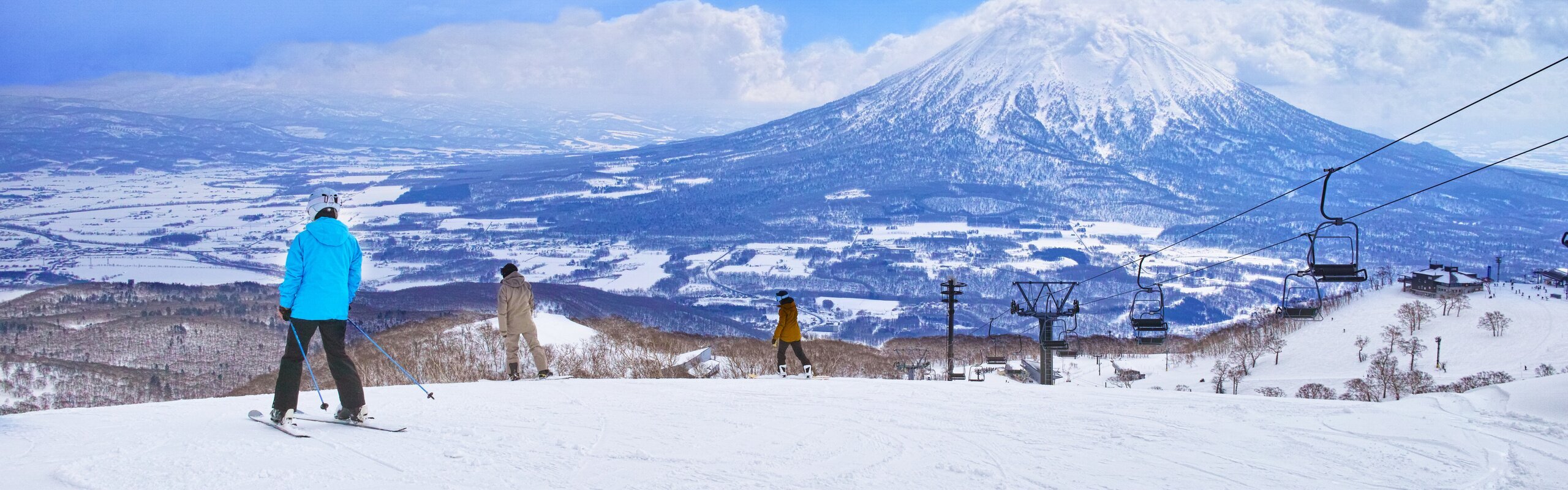
If you're planning your first ski trip to Japan, expect much more than just great snow.
Japan is famous for its deep powder, but that's only part of the experience. You can ski during the day, soak in an outdoor onsen afterwards, and end the evening in a cozy local restaurant or izakaya.
This guide will help you choose the right ski resort, the best time to visit, and how to plan a trip that suits you.
Where to Ski in Japan - How to Choose the Right Ski Resort in Japan
For most first-time visitors, the choice comes down to Hokkaido (Niseko) or Hakuba. Hokkaido is the best choice for powder snow, while Hakuba is easier to combine with Tokyo and Kyoto. The table below compares the two at a glance to help you choose the right one.
Hokkaido (Niseko) vs. Hakuba: Which is Better for You?
| Hokkaido | Hakuba (Nagano) | |
|---|---|---|
| Key resorts | Niseko, Furano, Rusutsu, Tomamu, Kiroro | Hakuba Valley (10 areas), Nozawa Onsen, Myoko |
| Powder quality | ⭐⭐⭐⭐⭐ Best in Japan — driest, lightest snow | ⭐⭐⭐⭐ Excellent — slightly denser, still outstanding Jan–Feb |
| From Tokyo | ~2h flight + 90min transfer. Full day of travel. | ~3h by Shinkansen + bus. Easy half-day transfer. |
| English support | Niseko: excellent. Furano: more limited. | Good at international hotels and rental shops |
| Price | Expensive | Mid-range |
| Local Atmosphere | Strong in Sapporo and Furano. Niseko feels more international. | Traditional onsen towns and alpine villages |
| Food Experience | Excellent seafood | Local Japanese cuisine such as Ramen |
| Best for | Dedicated ski holidays | First-time Japan ski visitors |
Choose Hokkaido if powder is your top priority and you want a ski-focused holiday.
Choose Hakuba if you want to combine skiing with Tokyo and Kyoto, especially on a shorter trip of around 8 days.
So, now you know which region you should go to. So which is the best ski resort for you?
Top Ski Resorts in Japan—Which One Is Right for You?
There is no single "best" ski resort in Japan. Most visitors choose between Niseko, Hakuba, Nozawa Onsen, and Furano. The best one depends on the experience you're looking for.
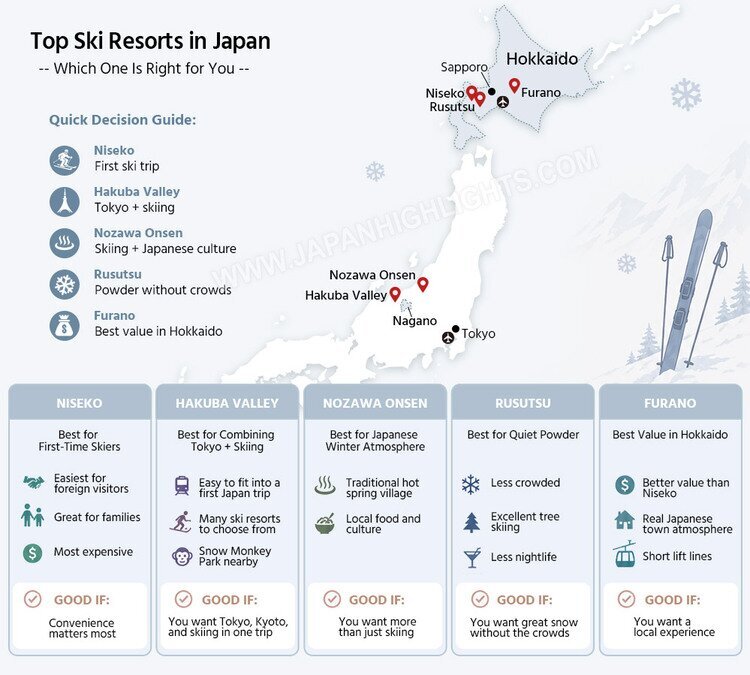
1. Niseko (Hokkaido) - Best for Reliable Powder and First-Time Skiers
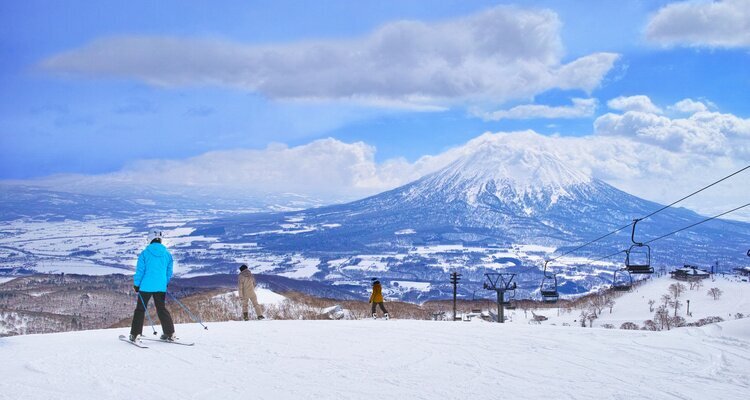
If this is your first ski trip to Japan, Niseko is the easiest place to start.
You'll find English almost everywhere, from ski schools and rental shops to restaurants and hotels. That makes the whole trip much easier if you don't speak Japanese.
The slopes suit both beginners and experienced skiers, but families usually prefer Niseko Village or Hanazono. They have gentle runs, ski-in/ski-out hotels, and a more relaxed atmosphere.
One thing to know before you book: Niseko is also Japan's most expensive ski resort. If you're after better value, Rusutsu is well worth considering.
2. Hakuba Valley—Best for Combining Skiing with Tokyo
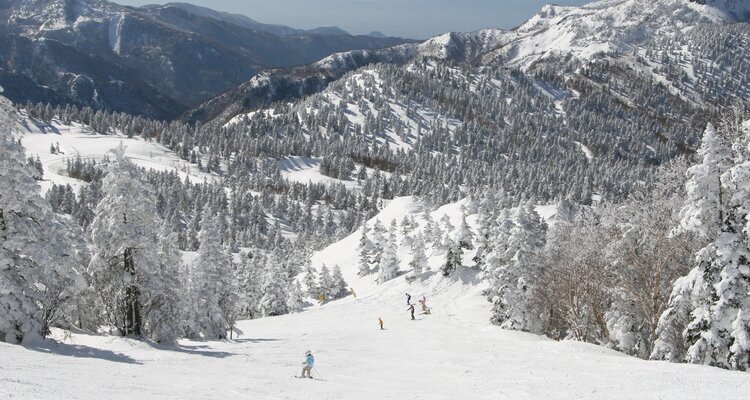
If you're planning a classic first Japan trip: Tokyo, then skiing, then Kyoto, Hakuba is the easiest choice. It's only about 3 hours from Tokyo, so it's easy to fit into your itinerary.
One thing many first-time visitors don't realize is that Hakuba isn't one ski resort. It's a valley with 10 different resorts, each with its own character.
Not sure which one to choose? Here's a simple guide:
- Happo-One – Best for experienced skiers and long runs.
- Goryu & Hakuba47 – Great for families and intermediate skiers.
- Tsugaike – Best for deep powder and tree skiing.
The resorts aren't connected by ski runs, so it's best to stay close to the one you plan to ski most.
From Hakuba, the Snow Monkey Park is about 45 minutes away, very easy to combine with your ski trip
3. Nozawa Onsen - Best for Hot Springs and Local Atmosphere
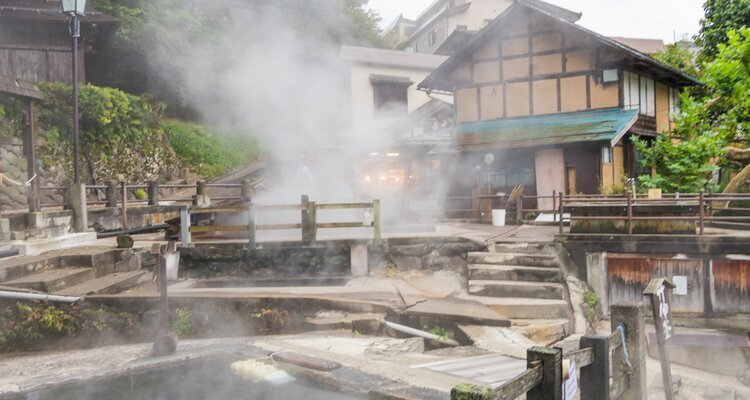
If you're looking for more than just skiing, choose Nozawa Onsen.
Unlike Niseko or Hakuba, this is a real hot spring village. After skiing, you can walk through narrow streets, soak in a traditional onsen, and enjoy the relaxed atmosphere. The village feels much more local than Japan's larger ski resorts.
The skiing is excellent too, with 36 runs for all skill levels. But for most visitors, it's the village itself that makes the trip memorable.
4. Rusutsu (Hokkaido)- Best for Quieter Slopes Than Nightlife
If you like the idea of Niseko but not the crowds, Rusutsu is a great alternative.
It's only about 40 minutes away and offers the same famous powder snow, but with much shorter lift lines. The resort covers three mountains, so there's plenty of terrain to explore without feeling crowded.
One thing to know before you book: Rusutsu is a resort, not a ski town. After skiing, there isn't much nightlife or shopping. If that's an important part of your trip, Niseko is the better choice.
For beginners, Niseko is also the easier option, with larger beginner areas and better value for first-time skiers.
5. Furano: Best for Quiet Slopes and a Local Town
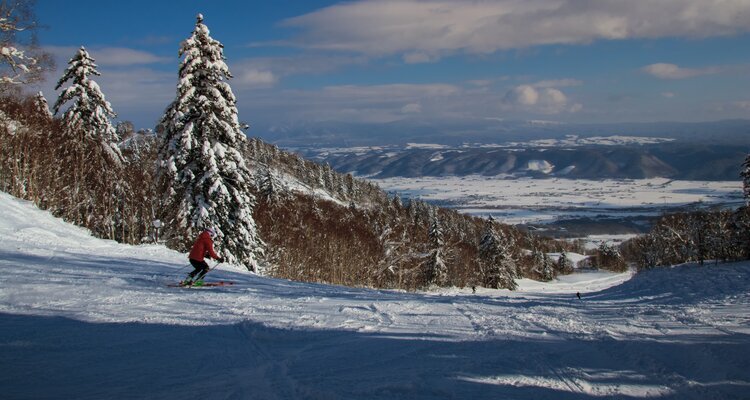
Furano is perfect if you want excellent snow, better value, and a more local experience. It is especially popular for skiers who have already done Niseko and want something different or anyone on a longer Hokkaido road trip.
The powder snow is just as good, but the crowds are much smaller. Lift lines are usually short, and hotels are often better value too.
Another reason many travelers like Furano is the town itself. Furano feels like a real Japanese town rather than a purpose-built ski destination.
These are Japan's most popular ski destinations, but they're far from the only options. Japan has dozens of ski resorts across the country. Read more: Japan's Best Ski Resorts on a Map
Looking for inspiration for your Japan ski holiday? Explore our most popular winter itineraries below. All tours can be tailored to fit your preferences.
How Many Days Do You Need for a Japan Ski Trip?
If you are mainly for skiing, you need at least 5 days. This gives you 3–4 full days on the slopes. For a short trip, focus on just one resort. Best for this format: Niseko (fly into New Chitose) or Hakuba (fly into Tokyo and transfer).
If you plan a ski holiday with sightseeing, you need at least 7 days.
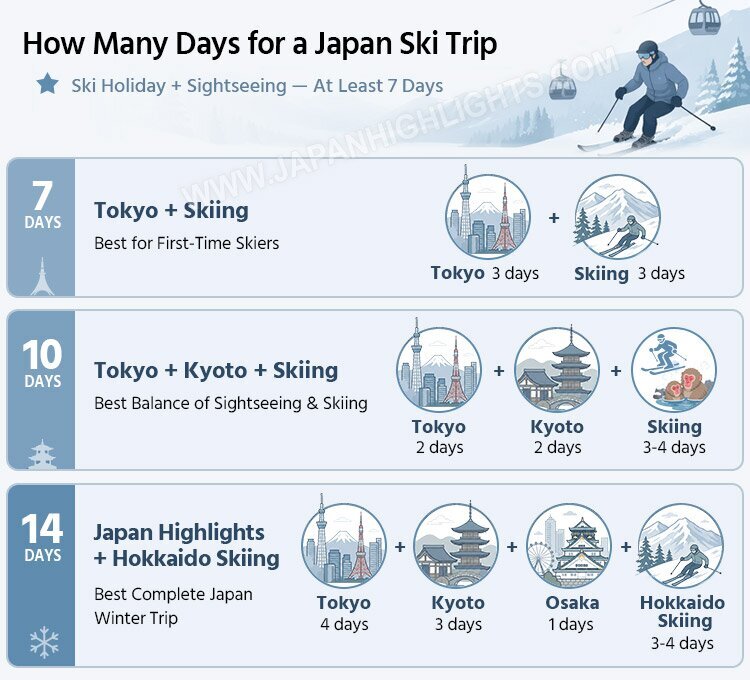
7 Days: Tokyo + Skiing
A 7-day itinerary allows you to perfectly balance highlights in Tokyo with one premium ski resort. We suggest 3 days in Tokyo and 3 days skiing. We recommend Nozawa Onsen. It is easy to reach from Tokyo and offers more than skiing, with traditional streets, public onsen, and excellent local food.
10 Days: Tokyo, Kyoto, and Skiing
With 10 days, you can experience Japan's classic highlights and still enjoy several days on the slopes. Plan 2 nights in Tokyo, 2 nights in Kyoto, and 3-4 nights for skiing, also with a visit to the famous snow monkeys.
This is one of the most popular options, as it combines culture, food, and skiing in a single trip.
14 Days: Japan's Best Cities + Hokkaido Skiing
With 14 days, you can explore Tokyo, Kyoto, and Osaka, then head north to Hokkaido for skiing. Allow 7–8 days for sightseeing and 4–5 days on the slopes. This option is great if you want both Japan's classic experiences and its world-famous powder snow.
How Much Does a Japan Ski Trip Cost?
A ski trip to Japan could be surprisingly affordable compared to North American resorts, with food, transportation, lift tickets, and gear rental generally costing less. However, hotel prices could be on the higher side. For the total cost, the hotel (mid-range) may cost about 30%, flights 30%, and the rest goes to about 40%;
Cost of Flights
- From the US: return flights to Tokyo run roughly $600–900 per person from the west coast in January and February ($900–1,400 from the east coast). January is the cheapest month to fly.
- From Australia: AUD 1,200–2,000 per person return. January is the most expensive month;
If you are planning a Hokkaido-only ski trip, flying directly into New Chitose Airport is often slightly cheaper than flying via Tokyo and cost of a domestic connection.
Costs on Accommodation
Prices vary significantly depending on where you stay. Niseko is most expensive, while Hakuba is much cheaper.
| Niseko | Hakuba | |
| Mid-range hotel/apartment | $200–400/night | $100–250/night |
| Ryokan with dinner + breakfast | $300–600/person/night | $150–350/person/night |
| Ski-in / ski-out (high-end) | $800–1,200+/night | $250-550/night |
Lift passes and rentals are very cheap. For instance, a day pass at Niseko, one of Japan's premier ski resorts, is around $80, and rentals are about $ 30- $ 50 per set.
If you're looking for the best value, consider staying in Hakuba, Nozawa Onsen, or Furano instead of Niseko.
Another good way is to travel in March. Hotel rates can drop considerably after February, crowds become smaller, and most Hokkaido resorts still offer excellent skiing conditions. Both Niseko and Furano remain open until late April or early May.
Top Experiences That Make Your Japan Skiing Trip Special
After a Day on the Slopes—Soak in an Outdoor Onsen
This is definitely the highlight of a Japan ski trip. After a day on the mountain, you soak in a traditional outdoor bath and sit in 40-degree mineral water while snow falls on your head. Most ryokans and many hotels near ski resorts have their own onsen baths. Nozawa Onsen has free public baths scattered through the village.
Skiing in Hakuba or Nozawa — Don't Miss the Snow Monkeys
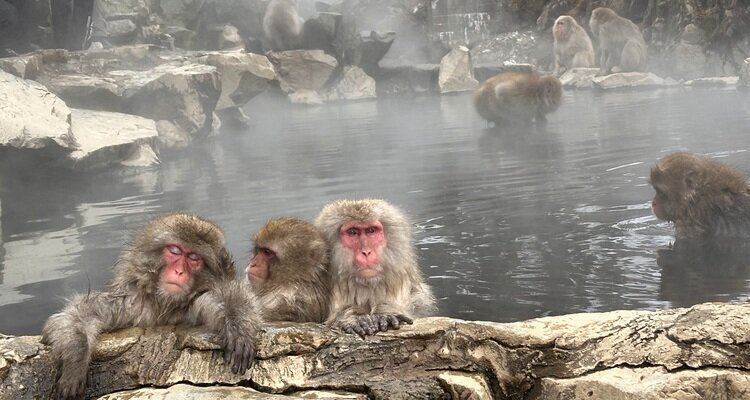
If you're skiing in Hakuba or Nozawa Onsen, don't miss the Snow Monkey Park. It's only about 45 minutes away, making it an easy side trip. You will see them soaking in hot springs for warmth, with snow resting on their heads.
Visiting in Early February — Add the Sapporo Snow Festival
Visiting in early February? Try to include the Sapporo Snow Festival.
It's one of Japan's biggest winter events, with giant snow sculptures, ice art, and a lively atmosphere throughout the city. If your ski trip starts or ends in Sapporo, it's well worth spending a day or two there.
Top 2 Japan Ski Itineraries
1. 8-Day Tokyo Highlights and Nozawa Onsen Skiing Tour
Day 1-3: Tokyo: Experience the contrast between traditional and modern Japan, from Senso-ji Temple and Meiji Shrine to the bustling streets of Shibuya. Take a day trip to Lake Kawaguchi for iconic Mt. Fuji views.
Day 4: Travel to Nagano and head to Nozawa Onsen. Stop at the Snow Monkey Park along the way.
Day 5-6: Enjoy two days of skiing and relaxing in Nozawa Onsen's famous hot springs.
Day 7-8: Spend your final day shopping, sightseeing, or dining in Tokyo before flying home.
2. 14-Day Japan Highlights and Skiing in Hokkaido
This itinerary combines Japan's classic highlights (Tokyo, Kyoto, and Osaka) with a skiing experience in Niseko. It's perfect for families with a relatively long stay of around 2 weeks.
Day 1-4, Tokyo: Explore Tokyo's mix of tradition and modernity, from historic temples to bustling neighborhoods and outstanding food. Take a day trip to Lake Kawaguchi for iconic Mt. Fuji views.
Day 5: Fly to Sapporo and Transfer to Niseko
Day 6-7: Enjoy two full days on the slopes and relax in hot springs after skiing.
Day 8-9: Fly to Osaka. The next day, visit Osaka Castle, and enjoy a half-day culinary delights adventure in vibrant Shinsekai
Day 10-12: Kyoto: Visit Kyoto's iconic temples and shrines, stroll through the historic streets of Gion, experience a traditional tea ceremony, and explore the Arashiyama Bamboo Grove and Monkey Park Iwatayama.
Day 13-14: Back to Tokyo and fly home
Use the above itineraries as inspiration for planning your own Japan ski trip. Or simply tell us your interests, travel dates, and schedule, and we'll create a customized itinerary that fits you perfectly.
When is the Best Time to Ski in Japan?
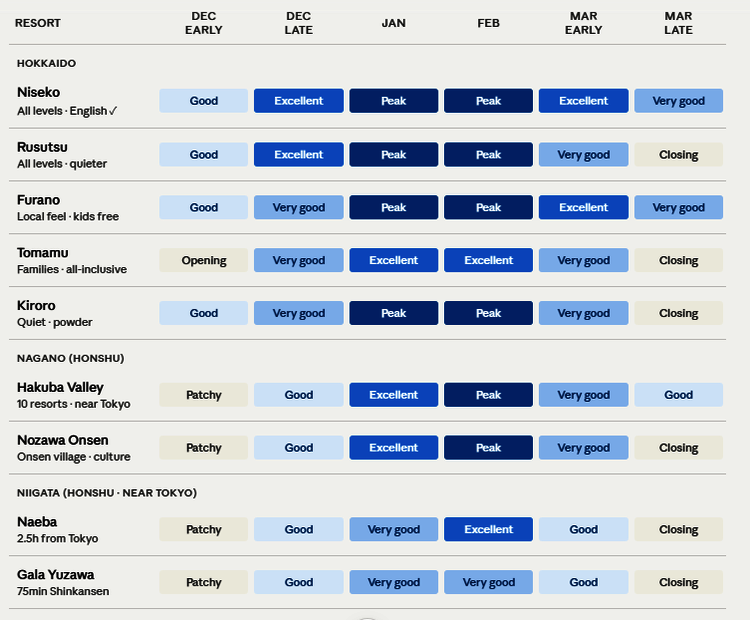
Japan's ski season runs from December to April. For the best powder snow, go in January or February. If you prefer quieter slopes and lower prices, early March is a great choice.
Here's what to expect each month:
1. December- Best for Christmas Holidays: Snow conditions may not be reliable in early December. Conditions improve quickly before Christmas. Crowds start increasing during the holiday season.
2. January: If you're chasing Japan's famous deep powder, January is the best month to go. Also, it is most crowded, especially late January to early February for Chinese New Year. Book everything months in advance.
3. February: Snow conditions are almost as good as January, but the crowds usually ease after the Chinese New Year holidays. For many travelers, mid-February is the sweet spot.
4. March: If you prefer quieter slopes and lower prices, visit in early March. Hokkaido usually still has excellent snow, while late March is better for spring skiing than powder.
See Japan Ski Resort Snow Conditions by Month as below:
Start Planning Your 2026/2027 Ski Trip Now
Skiing in Japan is super popular. Book early to grab the best hotels and prices. Waiting too long could mean paying more. Start planning now!
Final Tips for Planning Your First Ski Trip to Japan
1. Book your hotels and ski school early: If you're thinking about going in January or February, you should book accommodation 6-12 months in advance, by September or October at the latest. The best ski-in, ski-out at popular ski resorts, such as Niseko and Hakuba, often sell out months ahead. Ski schools can get fully booked as well.
2. Prioritize Convenience, Not Just Snowfall
Great snow matters, but convenience matters too. Choose a resort within walking distance to the lifts, restaurants, and onsens. A well-located hotel can make your trip much more enjoyable than a resort with slightly better snow conditions.
3. Focus on One Ski Resort
Don't try to ski at multiple resorts in one trip. Moving between Niseko and Furano, or Hakuba and Nozawa Onsen, sounds appealing. In reality, it is not that simple. You will need to repack gear, travel 2–3 hours, adjust to a new resort, and arrange different rentals. All of this while you are already tired from skiing.
4. Rent Your Ski Gear in Japan: There is no need to bring your own equipment unless you prefer using your personal gear. Most resorts offer a wide range of rental equipment at reasonable prices.
5. Carry Some Cash: Some mountain restaurants, small cafes, and local businesses near ski resorts still accept cash only. So be sure to take some cash with you.
FAQs on Skiing in Japan
Which Airport Is Best for Skiing in Japan?
If this is your first trip to Japan, fly into Tokyo (Haneda or Narita Airport). It is easy to combine skiing with visits to Japan's classic highlights, including Tokyo, Kyoto, Osaka, and Mt. Fuji.
If skiing is the main focus of your trip, fly into Sapporo (New Chitose Airport). It offers the most convenient access to Hokkaido's top ski resorts, including Niseko and Furano.
Is Japan good for beginner skiers?
Yes. Japan is excellent for beginner skiers. Most major resorts, including Niseko, Hakuba, and Nozawa Onsen, have wide and gentle beginner slopes. English-speaking ski schools are available at most resorts, so no worries about language barriers. Ski gear is easy to rent, so you don't need to bring your own equipment.
Is English Widely Spoken?
Yes, especially in Niseko and Hakuba, where English is widely spoken. Menus, signs, lift staff, and ski schools are all foreigner-friendly.
At Nozawa Onsen, Rusutsu, and smaller resorts in Shiga Kogen, basic English is usually available at major facilities. However, some restaurants, onsens, and smaller lift stations may have limited English support.
Can you ski in Japan in late March or April?
Yes. Head to Hokkaido for the best spring skiing conditions. Resorts such as Niseko and Furano often stay open until late April, while most Hakuba resorts usually close between late March and mid-April, depending on the season.
Spring skiing in Japan has its own appeal: clearer skies, longer daylight hours, fewer crowds, and more affordable prices.
Plan Your Ski Trip 2026/2027 with Us
Skiing in Japan is incredibly popular, so it's best to book your hotel 6 to 12 months in advance. Now is the perfect time to start planning your 2025 ski trip! Check out some of our most popular ski itineraries, or let our Japan travel advisor help you create a unique itinerary tailored to your interests.
- 8-Day Tokyo Highlights and Nagano Skiing Tour
- 12-Day Japan Classics and Hakuba Skiing Winter Tour
- 14-Day Japan Highlights and Skiing in Hokkaido